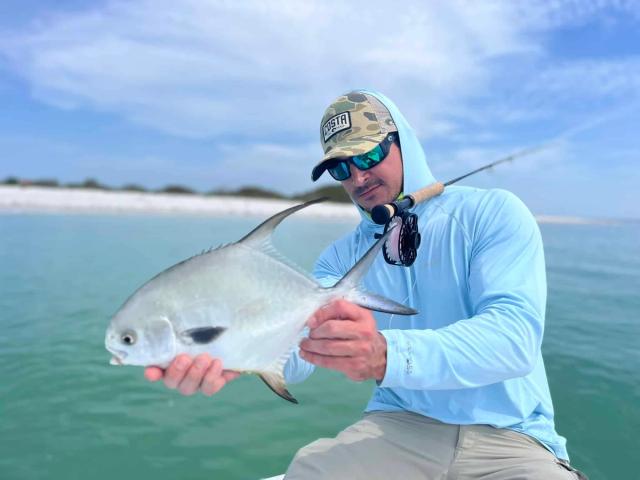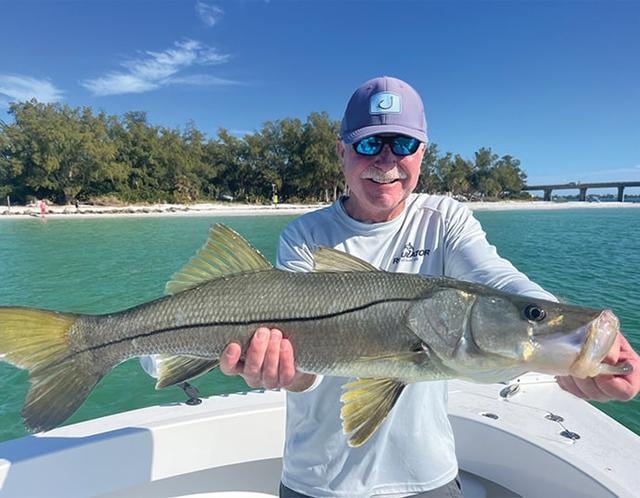
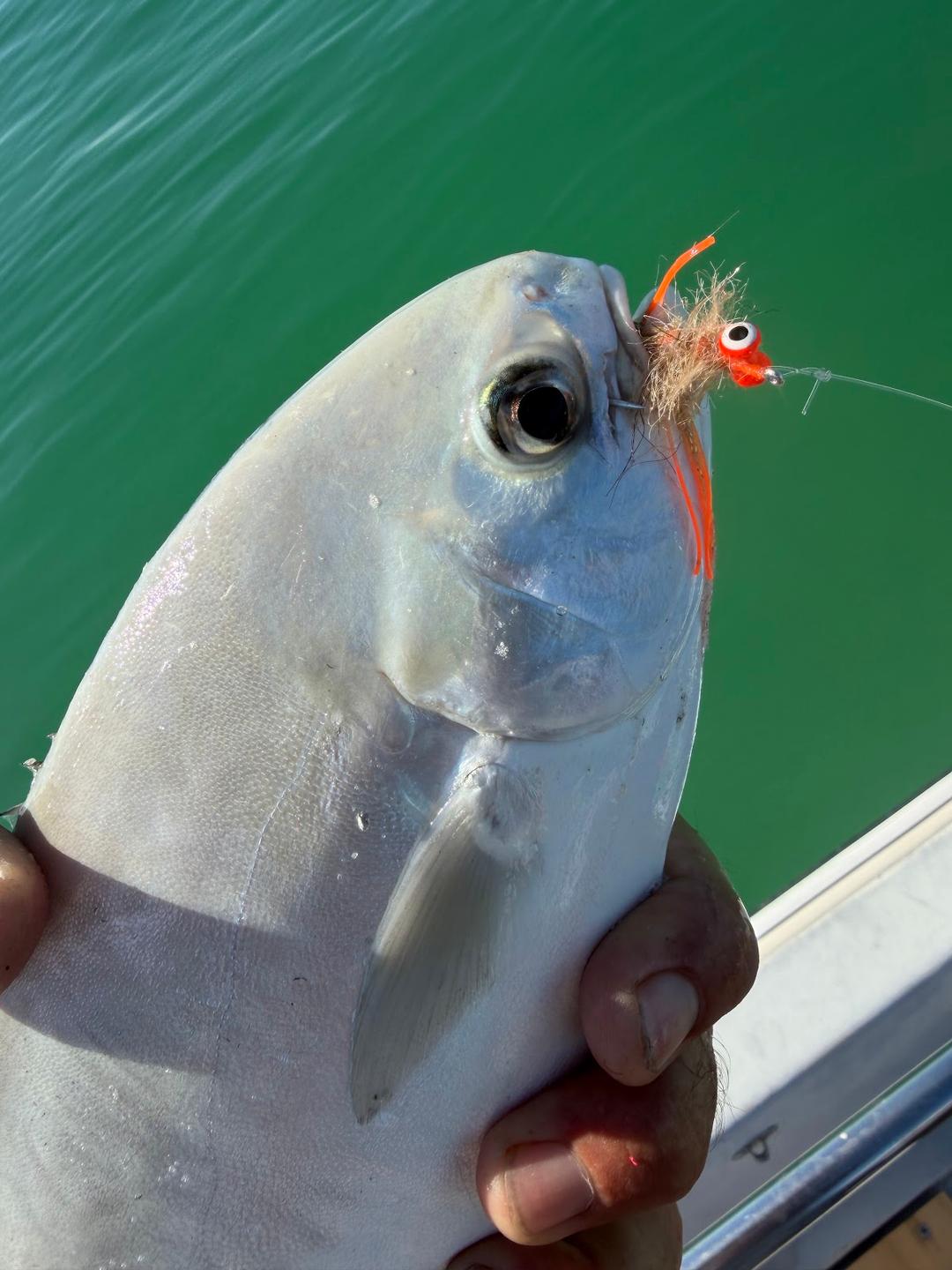
Good pompano fishing in Florida doesn't start on a date circled on a calendar — it starts with the first real cold front that knocks the Gulf out of its summer heat. Once that happens along Anna Maria Island and the passes we run out of Holmes Beach, pompano start showing up in numbers they haven't held all summer, stacking up on the sandbars and in the troughs where the outgoing tide drops bait. They stick around through winter, too. A lot of our fall and winter inshore fishing charters get built around exactly that pattern — not because the fish show up on schedule every October, but because cooling water is what moves them, and we watch the water instead of a page on a calendar.
Why Pompano Fishing in Florida Turns On With the First Cold Front
Florida's wildlife agency notes that pompano move locally with the tide, but their bigger seasonal moves are driven by water temperature, not a date on the clock. That's the whole mechanism behind a pompano run: as Gulf water cools heading into fall, fish that spent the warm months scattered start grouping up and moving into protected water near the coast, including the passes and sandy edges around Anna Maria Island, Tampa Bay, and Sarasota Bay. Anna Maria Island sits right where that temperature-driven movement runs into the barrier-island passes and bay mouths we fish, so the pompano don't have to travel far from open Gulf water to find the structure and current breaks they're looking for. A string of cold fronts speeds the run up; a mild, warm stretch slows it back down or stalls it for a week. That's why we don't promise a client pompano on a specific date in October — we promise to go where the last cold front pushed them.
Fishing the Passes for Pompano: What Changes Between July and October
We fish pompano light: spinning gear, 15-pound fluorocarbon leader, and a quarter- to half-ounce jig in white, pink, or yellow, bounced just off the bottom through the sandy troughs and pass mouths where the moving tide stacks up bait. Live sand fleas work just as well when we can get them, fished the same way, slow and close to the sand. We'll work the Gulf-side beaches on calm mornings too, covering the first trough past the breakers, especially right after a front when the surf lies down. When a school's actually running through, you'll often see it before you hook anything — nervous water, little flashes of silver, sometimes a fish skipping clear of the surface with something bigger working it from underneath. That's a different trip than fishing the same stretches in July, when the water's warmer and pompano are thinner on the ground; most of our summer charters lean on redfish and trout instead, with pompano turning up as a bonus rather than the main event.
Florida's Pompano Rules — and the One Mistake That's Easy to Make in a Big School
Pompano are open year-round in Florida, with an 11-inch minimum fork length and a six-fish daily bag per angler, and you're allowed to take them on hook and line, cast net, or beach and haul seine. The rule that trips people up once a big school is stacked up tight under the boat: snagging is illegal, and so is using more than one hook rigged with live or dead natural bait. No treble-hook jigs dragged blind through the school hoping to foul-hook one — every fish that comes over the rail has to be hooked clean in the mouth, same as if you were only catching one at a time.
If you'd rather be on the water when the run's actually happening than guess at a date from shore, book one of our inshore charters and we'll build the trip around whatever the water's doing that week — pompano if a front just pushed them into the passes, redfish and trout if it hasn't happened yet, usually some mix of all three by the time we head back in.
Ready for a day like this on the water? Book an Anna Maria Island fishing charter with Captain David White or compare our guided trip options — trips run year-round from Holmes Beach.